 EN
EN

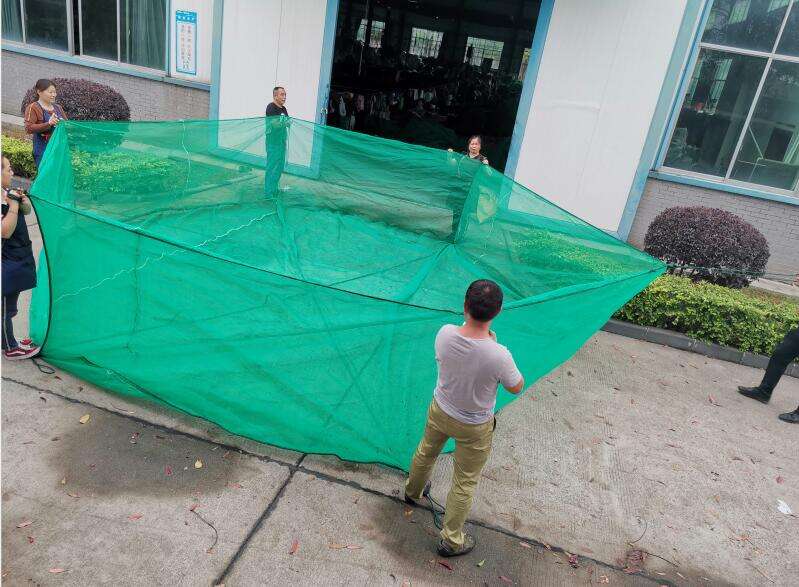
The question of whether fishing cage net systems are suitable for both offshore and nearshore operations is critical for aquaculture operators planning cage-based fish farming ventures. The answer is nuanced and depends on multiple factors including net material specifications, structural design, environmental conditions, and operational requirements. A fishing cage net can indeed serve both operational zones, but its suitability hinges on proper material selection, construction standards, and deployment strategies that account for the distinct challenges each environment presents. Understanding these considerations helps operators make informed decisions that balance productivity, durability, and economic viability in their aquaculture operations.
Both offshore and nearshore aquaculture environments demand specific performance characteristics from fishing cage net systems, yet they differ substantially in wave energy, current velocity, depth, exposure duration, and maintenance accessibility. Nearshore operations typically occur within protected bays, estuaries, or coastal zones where water depth ranges from 10 to 30 meters and wave conditions remain relatively moderate. Offshore operations, conversely, take place in deeper waters beyond 40 meters depth, where cage structures face significantly higher wave forces, stronger currents, and extended periods between maintenance cycles. The fishing cage net must demonstrate mechanical resilience, abrasion resistance, biofouling management capabilities, and structural integrity appropriate to the specific deployment zone while maintaining the mesh specifications required for the target species being cultivated.
Environmental Condition Differences Between Offshore and Nearshore Zones
Wave Energy and Hydrodynamic Forces
Nearshore fishing cage net installations experience wave heights typically ranging from 0.5 to 2 meters under normal conditions, with occasional storm events pushing waves to 3-4 meters. The wave periods in these protected zones are generally shorter, between 4 to 7 seconds, creating a different stress pattern on net materials compared to offshore environments. The fishing cage net in nearshore settings must withstand moderate but repetitive flexing forces that can cause material fatigue over time, particularly at attachment points and seam locations where stress concentrates during wave action.
Offshore operations subject the fishing cage net to significantly more severe hydrodynamic conditions, with wave heights routinely reaching 3 to 5 meters and storm conditions generating waves exceeding 8 meters. Wave periods extend to 8-12 seconds or longer, creating powerful surge forces that test the structural limits of netting materials. The fishing cage net deployed offshore must possess superior tensile strength, typically requiring breaking loads 40-60% higher than nearshore equivalents to maintain structural integrity. The continuous exposure to high-energy wave action accelerates material wear, demanding more frequent inspection protocols and potentially shorter replacement cycles compared to nearshore installations.
Current Velocity and Flow Dynamics
Current patterns in nearshore zones tend to be more variable and influenced by tidal exchanges, freshwater inputs, and coastal topography. Nearshore fishing cage net systems typically encounter current velocities between 0.2 to 0.8 meters per second, with occasional tidal surges reaching 1.2 meters per second in constricted passages. These moderate currents provide adequate water exchange for fish health while placing manageable drag forces on the netting structure. The fishing cage net mesh must balance flow-through characteristics that maintain dissolved oxygen levels while minimizing drag-induced deformation that could reduce cage volume or compromise structural geometry.
Offshore environments generally feature stronger and more consistent current regimes, with velocities commonly ranging from 0.5 to 1.5 meters per second and storm-enhanced currents occasionally exceeding 2 meters per second. These elevated current speeds create substantially higher drag forces on the fishing cage net, requiring materials with lower drag coefficients and superior shape retention properties. The increased flow also provides excellent water quality conditions but demands that the fishing cage net maintain structural form under continuous hydraulic loading. Net designs for offshore use often incorporate heavier twine diameters and optimized mesh geometries that balance strength requirements against flow resistance to prevent excessive cage deformation during high-current events.
Depth Considerations and Operational Access
Nearshore fishing cage net installations benefit from relatively shallow operational depths that facilitate diver access, net inspection, maintenance operations, and emergency interventions. Water depths of 15-25 meters allow conventional diving teams to perform routine biofouling removal, damage assessment, and minor repairs using standard compressed air equipment. This accessibility enables more frequent hands-on maintenance of the fishing cage net, potentially extending service life through proactive care and early detection of wear patterns or structural issues before they compromise cage integrity.
Offshore fishing cage net systems operate in depths often exceeding 50-80 meters, where maintenance access becomes significantly more challenging and costly. Technical diving requirements, remotely operated vehicle deployment, or specialized submersible equipment may be necessary for thorough inspection and maintenance activities. The reduced accessibility demands that offshore fishing cage net materials demonstrate superior durability and extended service intervals, as reactive maintenance becomes impractical and preventive replacement schedules must be more conservative. This operational reality often justifies the higher initial investment in premium netting materials specifically engineered for extended offshore deployment cycles.
Material Performance Requirements for Different Operational Zones
Tensile Strength and Breaking Load Specifications
The tensile strength requirements for a fishing cage net vary substantially between nearshore and offshore applications, driven by the differential loading conditions each environment imposes. Nearshore installations typically specify netting with breaking loads between 400-800 kilograms per linear meter for main cage panels, with reinforced sections at stress concentration points achieving 1000-1200 kilograms per linear meter. These specifications provide adequate safety margins for typical nearshore conditions while maintaining cost effectiveness and reasonable handling characteristics during installation and maintenance operations.
Offshore fishing cage net systems demand significantly higher strength specifications, with main panel breaking loads typically ranging from 800-1500 kilograms per linear meter and critical structural components requiring 1500-2500 kilograms per linear meter or more. The enhanced strength requirements reflect the substantially higher peak loads generated during storm events and the need for greater safety factors given limited emergency response capabilities in offshore locations. High-strength nylon monofilament and advanced knotless construction techniques enable fishing cage net materials to meet these demanding specifications while maintaining the mesh flexibility necessary for proper deployment and operational performance in high-energy marine environments.
Abrasion Resistance and Material Durability
Nearshore fishing cage net systems experience moderate abrasion primarily from fish contact, predator interactions, and occasional contact with vessel hulls during feeding operations or maintenance activities. The protected nature of nearshore sites generally minimizes exposure to abrasive sediments or debris, though areas with significant boat traffic or industrial activity may present additional wear challenges. Netting materials with standard abrasion resistance properties typically provide adequate service life in these conditions, with replacement intervals commonly ranging from 3-5 years depending on stocking density, species behavior, and maintenance practices.

Offshore fishing cage net installations face substantially more aggressive abrasion conditions from multiple sources including higher fish activity levels in the enhanced current flows, more frequent predator pressure from larger pelagic species, and potential contact with floating debris transported by ocean currents. The fishing cage net material must demonstrate superior abrasion resistance to withstand these accumulated wear mechanisms throughout extended deployment periods. Advanced surface treatments, optimized polymer formulations, and construction techniques that distribute stress evenly across the netting structure all contribute to enhanced abrasion performance essential for offshore longevity. Premium offshore fishing cage net products may achieve service lives of 5-8 years when properly maintained, justifying their higher initial cost through reduced replacement frequency and minimized production disruption.
UV Resistance and Photodegradation Protection
Both nearshore and offshore fishing cage net systems require effective ultraviolet radiation protection, though exposure patterns differ between the two environments. Nearshore installations in shallower waters experience more direct sunlight exposure, particularly in clear tropical or subtropical waters where UV penetration reaches significant depths. The fishing cage net materials deployed nearshore must incorporate adequate UV stabilizers to prevent photodegradation that weakens polymer chains and reduces tensile strength over time. Modern nylon monofilament materials typically include 2-3% carbon black or specialized UV inhibitor packages that extend service life even under high solar radiation conditions.
Offshore fishing cage net systems, despite operating in deeper waters, still require robust UV protection due to extended surface exposure during transport, storage, deployment operations, and the portion of netting that remains in the high-irradiance surface zone. The combination of intense open-ocean sunlight and prolonged deployment periods without maintenance intervention demands maximum UV resistance from offshore netting materials. High-performance fishing cage net products designed for offshore use often incorporate premium UV stabilizer systems that maintain material properties for 8-10 years of continuous exposure, ensuring that photodegradation does not become the limiting factor in net service life before mechanical wear or biofouling requires replacement.
Structural Design Adaptations for Operational Environments
Mesh Size Selection and Flow Dynamics
Mesh size selection for fishing cage net systems must balance fish retention requirements against hydrodynamic performance considerations that differ between nearshore and offshore environments. Nearshore installations can employ slightly smaller mesh sizes without excessive drag penalties due to the moderate current velocities typical of protected coastal zones. A fishing cage net with mesh sizes ranging from 20-35 millimeters provides effective containment for most marine finfish species while maintaining adequate water exchange for fish health in nearshore conditions. The reduced current forces allow operators to prioritize escape prevention and predator exclusion over drag minimization when specifying mesh dimensions.
Offshore fishing cage net systems require more careful mesh size optimization to prevent excessive drag-induced deformation in high-current environments. Operators must select the largest mesh size compatible with fish retention requirements to minimize flow resistance and maintain cage volume under operational conditions. Typical offshore mesh specifications range from 30-50 millimeters, with larger sizes preferred when compatible with the size distribution of cultivated species. The fishing cage net design for offshore use may incorporate variable mesh sizing, with smaller retention meshes in lower cage sections where current forces are reduced and larger meshes in upper sections where flow velocities peak, optimizing the balance between containment security and hydrodynamic efficiency.
Panel Configuration and Structural Reinforcement
Nearshore fishing cage net configurations typically employ rectangular or square panel arrangements that simplify construction, installation, and replacement operations in the more accessible nearshore environment. Panel sizes commonly range from 4-8 meters on a side, with perimeter reinforcement provided by doubled or tripled edge ropes and corner grommet assemblies that distribute loads to the cage frame structure. The fishing cage net panels in nearshore systems may utilize standard construction techniques with knotted or knotless joining methods that provide adequate strength for the moderate loading conditions while maintaining cost effectiveness for operations that can implement more frequent inspection and maintenance schedules.
Offshore fishing cage net systems demand more sophisticated structural configurations with extensive reinforcement strategies to withstand extreme loading events. Panel designs often incorporate radial or diamond-pattern layouts that distribute stress more evenly across the netting structure and reduce peak loads at connection points. Reinforcement zones extend well beyond edge perimeters, with graduated twine diameter transitions that prevent stress concentrations at material interfaces. The fishing cage net construction for offshore applications frequently employs advanced knotless braiding techniques that eliminate weak points inherent in traditional knotted designs, achieving more uniform strength distribution throughout the netting structure and improving fatigue resistance under cyclic loading conditions characteristic of offshore wave environments.
Cage Geometry and Volume Optimization
Nearshore fishing cage net installations commonly utilize cylindrical or square configurations with relatively high aspect ratios, as the moderate current forces allow for deeper cage profiles without excessive deformation. Standard nearshore cages might measure 15-25 meters in circumference with depths of 8-15 meters, providing volumes of 1500-5000 cubic meters suitable for commercial-scale production. The fishing cage net geometry in nearshore systems can prioritize volumetric efficiency over hydrodynamic optimization, as the protected operational environment tolerates less streamlined cage shapes without compromising structural integrity or fish welfare.
Offshore fishing cage net systems typically employ larger-diameter, lower-profile geometries that reduce current-induced deformation while maximizing production volume. Offshore cages commonly feature circumferences of 30-60 meters with depths of 10-20 meters, yielding volumes of 5000-30000 cubic meters that justify the higher infrastructure and operational costs associated with offshore aquaculture. The fishing cage net design must maintain structural form under high current conditions that could compress conventional deep-profile cages, potentially requiring additional mid-depth support structures or specialized high-modulus netting materials that resist deformation. The larger scale of offshore installations also influences netting specifications, as the absolute forces acting on individual panel sections scale with cage dimensions, demanding proportionally stronger materials even when current velocities remain comparable to nearshore conditions.
Operational Considerations and Deployment Strategies
Installation Logistics and Handling Requirements
Nearshore fishing cage net installations benefit from logistical advantages that simplify deployment operations and reduce specialized equipment requirements. Proximity to shore-based facilities enables transport of netting materials using conventional marine vessels, with installation teams able to complete cage assembly and net attachment operations in relatively protected waters. The fishing cage net can be pre-assembled on shore or on floating work platforms, then towed to the installation site for final attachment to mooring systems. The accessible nature of nearshore sites allows for iterative deployment approaches where installation procedures can be adjusted based on real-time conditions without extended offshore exposure for personnel and equipment.
Offshore fishing cage net deployment demands more sophisticated logistical planning and specialized marine equipment capable of operating in exposed ocean conditions. Heavy-lift vessels, dynamic positioning systems, and coordinated marine operations become necessary for safe and efficient installation of large-scale offshore cage systems. The fishing cage net materials must be packaged and transported in configurations that protect them during extended offshore transit while facilitating efficient deployment once on site. Pre-assembly of netting to cage frames may occur at protected inshore locations with subsequent towing of complete cage systems to offshore sites, or alternatively, staged deployment sequences where frames are positioned first with netting installation following under favorable weather windows. The higher logistical complexity and weather dependency of offshore deployment operations significantly influences project economics and schedule planning for offshore aquaculture ventures.
Maintenance Protocols and Service Intervals
Nearshore fishing cage net maintenance programs typically implement monthly inspection cycles with quarterly cleaning operations to manage biofouling accumulation and assess material condition. The accessibility of nearshore sites enables dive teams to perform routine cleaning using high-pressure water systems or mechanical brushes that remove algae, hydroids, and other fouling organisms before they significantly compromise water flow through the netting. The fishing cage net in nearshore operations can be monitored continuously for damage or wear, with small repairs addressed promptly before localized issues propagate into structural failures requiring emergency cage changes or fish transfer operations.
Offshore fishing cage net systems require extended maintenance intervals due to access limitations and higher operational costs associated with offshore marine activities. Inspection and cleaning cycles typically extend to quarterly or semi-annual schedules, with preventive net replacement planned on 3-5 year rotations rather than reactive replacement based on condition assessment. The fishing cage net materials selected for offshore use must tolerate longer biofouling accumulation periods between cleaning events, potentially requiring copper-based antifouling treatments or advanced polymer formulations that inherently resist biological colonization. Remote monitoring systems incorporating underwater cameras and environmental sensors help operators assess cage and netting condition without physical site visits, enabling more strategic deployment of expensive offshore maintenance operations when monitoring data indicates intervention is necessary.
Economic Considerations and Return on Investment
Nearshore fishing cage net operations generally require lower initial capital investment due to smaller cage sizes, less specialized materials, more accessible installation sites, and proximity to existing coastal infrastructure. The fishing cage net materials specified for nearshore use, while requiring adequate quality for marine aquaculture applications, need not meet the extreme performance standards demanded by offshore environments. Total netting costs for a typical nearshore cage system might range from $15,000-$40,000 depending on cage size and material specifications, with replacement cycles of 3-5 years creating predictable ongoing material expenses that can be absorbed within typical aquaculture operating budgets.
Offshore fishing cage net systems involve substantially higher capital investment reflecting the premium materials, larger cage scales, specialized installation requirements, and enhanced mooring systems necessary for exposed ocean environments. The fishing cage net materials alone for a commercial-scale offshore cage might cost $80,000-$250,000, with the expectation that these premium materials will provide 5-8 year service lives that justify the increased investment. However, the enhanced production capacity of offshore cages, typically 3-6 times greater than nearshore equivalents, generates proportionally higher revenue potential that can support the elevated infrastructure costs. Comprehensive economic analysis must consider not only netting expenses but also installation costs, maintenance frequencies, production yields, and market access advantages when evaluating the financial viability of nearshore versus offshore cage aquaculture operations and the fishing cage net specifications appropriate to each environment.
FAQ
What are the primary material differences between nearshore and offshore fishing cage nets?
Offshore fishing cage net materials require 40-60% higher tensile strength specifications compared to nearshore equivalents, typically featuring breaking loads of 800-1500 kg/linear meter versus 400-800 kg/linear meter for nearshore applications. Offshore nets also incorporate enhanced UV stabilization packages, superior abrasion resistance formulations, and often utilize larger twine diameters (typically 3-6mm versus 2-4mm nearshore) to withstand the more severe wave forces, stronger currents, and extended deployment periods characteristic of exposed ocean environments. The construction techniques also differ, with offshore nets more frequently employing advanced knotless braiding methods that eliminate structural weak points and improve fatigue resistance under cyclic loading conditions.
Can the same fishing cage net design be used interchangeably between nearshore and offshore sites?
While theoretically possible to deploy offshore-specification fishing cage nets in nearshore environments, the reverse approach is not recommended due to safety and durability concerns. Nets designed for nearshore conditions lack the structural strength, abrasion resistance, and fatigue performance necessary for reliable offshore operation and would face accelerated failure risk in high-energy offshore environments. Using offshore-specification nets nearshore represents over-engineering that increases material costs without corresponding operational benefits, though some operators adopt this approach when planning to relocate cages between environments or when seeking maximum safety margins. The optimal strategy involves matching fishing cage net specifications precisely to the intended deployment environment, considering the specific wave climate, current regime, depth conditions, and maintenance access capabilities of each installation site.
How does biofouling management differ between nearshore and offshore fishing cage net systems?
Nearshore fishing cage nets typically experience faster biofouling accumulation due to higher nutrient concentrations in coastal waters, requiring monthly to quarterly cleaning interventions to maintain adequate water flow through the mesh structure. The accessibility of nearshore sites enables frequent mechanical or pressure-washing cleaning operations that can be performed by dive teams or automated cleaning systems without extensive logistical planning. Offshore fishing cage nets benefit from lower nutrient conditions in open ocean waters that slow biofouling rates, but the reduced accessibility demands longer intervals between cleaning operations, typically quarterly to semi-annual schedules. Offshore nets may incorporate copper-based antifouling treatments or specialized polymer formulations that inherently resist biological colonization, helping maintain performance during extended periods between maintenance interventions when offshore access is restricted by weather conditions or operational economics.
What are the typical replacement intervals for fishing cage nets in nearshore versus offshore operations?
Nearshore fishing cage nets typically achieve service lives of 3-5 years before material fatigue, accumulated abrasion damage, or biofouling management challenges necessitate replacement, though aggressive maintenance programs and favorable environmental conditions can extend service intervals toward the upper end of this range. Offshore fishing cage nets, despite exposure to more severe environmental conditions, often achieve comparable or slightly longer service lives of 4-6 years when constructed from premium materials specifically engineered for offshore deployment. The extended offshore service intervals reflect the use of higher-specification materials, more robust construction techniques, and preventive replacement strategies that retire nets before condition-based failures occur, as emergency net changes in offshore locations involve substantially higher costs and operational risks compared to nearshore environments where reactive maintenance approaches remain feasible.
Table of Contents
- Environmental Condition Differences Between Offshore and Nearshore Zones
- Material Performance Requirements for Different Operational Zones
- Structural Design Adaptations for Operational Environments
- Operational Considerations and Deployment Strategies
-
FAQ
- What are the primary material differences between nearshore and offshore fishing cage nets?
- Can the same fishing cage net design be used interchangeably between nearshore and offshore sites?
- How does biofouling management differ between nearshore and offshore fishing cage net systems?
- What are the typical replacement intervals for fishing cage nets in nearshore versus offshore operations?