 EN
EN

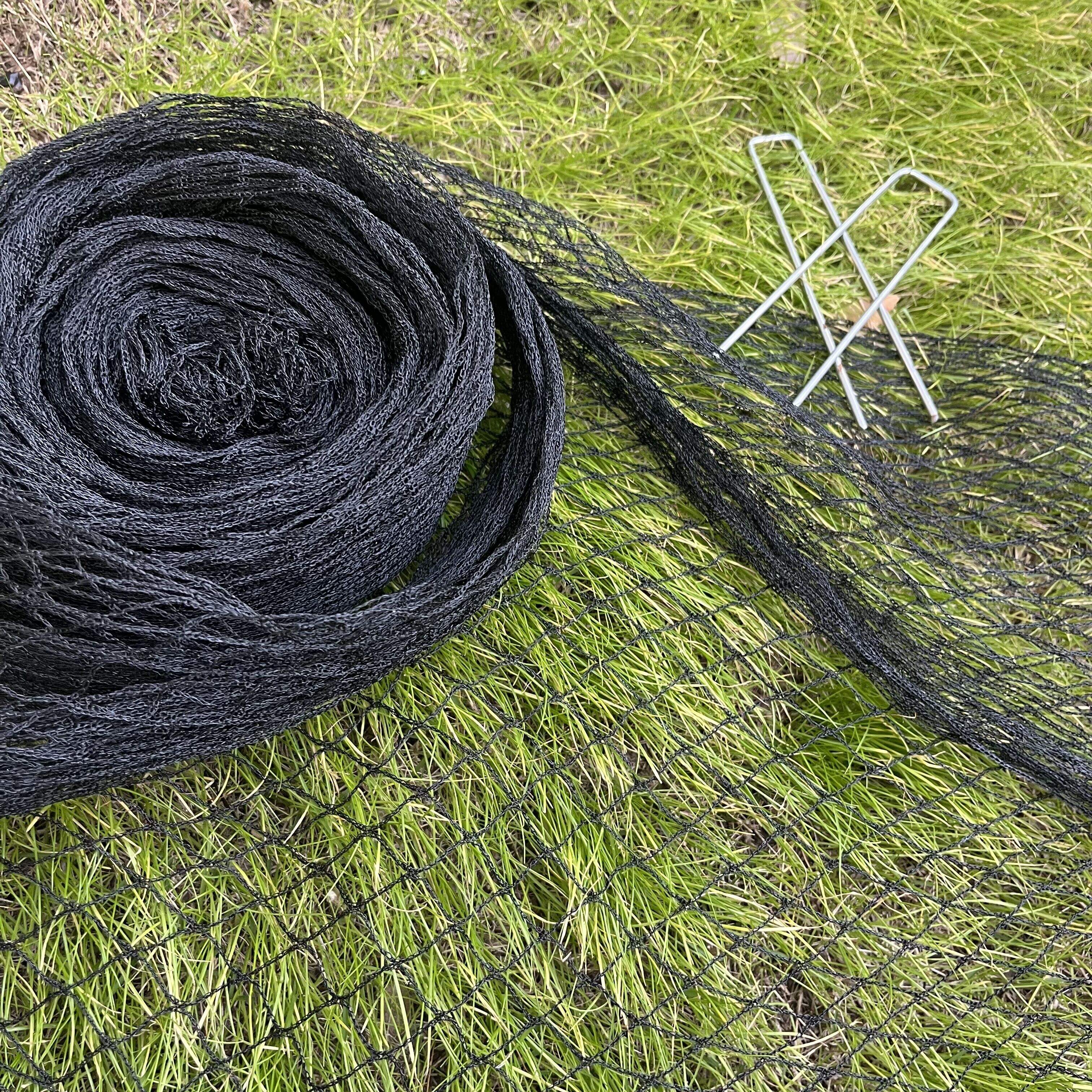
When protecting gardens, fishponds, crops, and outdoor spaces from birds and wildlife, the choice of netting material carries real consequences. A bird net that is too heavy becomes a burden during installation, requiring extra labor, structural support, and time. One that is too light may fail under tension, weather exposure, or the persistent pressure of larger birds. The engineering challenge at the heart of modern bird net design is achieving both properties simultaneously — robust enough to hold, light enough to handle.
This balance is not accidental. It results from deliberate material selection, mesh geometry, and manufacturing processes that have evolved significantly over the past two decades. Understanding how a quality bird net achieves this balance helps buyers, installers, and facility managers make smarter procurement decisions. Whether you are covering a koi pond, a blueberry farm, or a commercial greenhouse, the structural logic behind your bird net directly affects how long it lasts, how easily it installs, and how reliably it performs season after season.
The Material Science Behind Bird Net Strength
Polymer Selection and Tensile Performance
The foundation of any effective bird net lies in the polymer used to manufacture its fibers. High-density polyethylene, commonly known as HDPE, has become the dominant material in professional-grade bird net products. HDPE offers an exceptional strength-to-weight ratio, meaning it delivers significant tensile resistance without adding unnecessary mass to the finished mesh. This is critical because weight is the primary enemy of easy installation, especially over large horizontal spans like ponds or orchard rows.
The molecular structure of HDPE allows it to resist stretching under load while remaining flexible enough to fold, roll, and drape without cracking. When manufacturers draw HDPE into fine monofilament or multifilament strands, they can control the denier — the thickness of each fiber — to tune the final bird net for specific load requirements. A heavier denier produces a stronger net, while a finer denier reduces weight. The skill in bird net engineering is finding the denier range that satisfies both demands without compromise.
UV stabilization is another critical factor in material performance. Outdoor bird net is exposed to sunlight for months or years at a time. Without UV inhibitors blended into the polymer, the material degrades rapidly, losing tensile strength and becoming brittle. Quality bird net incorporates UV stabilizers during the extrusion process, ensuring the material retains its mechanical properties across multiple growing seasons or years of continuous outdoor use.
Knotted vs. Knotless Mesh Construction
The way individual strands are joined together has a direct impact on both the strength and the weight of a bird net. Traditional knotted mesh creates junction points where strands are physically tied. These knots add localized mass and can become stress concentration points under tension, potentially weakening the net at those exact locations over time. However, knotted bird net is well understood, easy to repair in the field, and remains popular for heavy-duty agricultural applications.
Knotless or extruded mesh takes a different approach. The mesh is formed as a single integrated structure during manufacturing, with junction points that are fused rather than tied. This eliminates the weight penalty of knots and distributes load more evenly across the entire bird net surface. Knotless construction also produces a smoother, more uniform mesh that is easier to handle, less likely to snag on vegetation or equipment, and generally lighter per square meter than equivalent knotted designs.
For applications like pond covers and garden protection, knotless bird net has become the preferred choice precisely because it combines high strength with reduced installation effort. The smooth surface also makes it easier to remove debris, leaves, and bird droppings, extending the functional life of the net without requiring intensive maintenance.
How Mesh Geometry Contributes to the Strength-Weight Balance
Aperture Size and Structural Efficiency
The size of the openings in a bird net — referred to as the aperture or mesh size — plays a more significant structural role than many buyers realize. A smaller aperture means more strand material per square meter, which increases both weight and strength. A larger aperture reduces material use, lowering weight but also reducing the net's resistance to tearing and deformation under load. Selecting the right aperture for a specific application is therefore a direct engineering decision that affects the strength-weight balance of the bird net.
For most garden and pond applications, apertures in the range of 15mm to 25mm provide an effective compromise. They are small enough to exclude common pest birds such as pigeons, starlings, and herons, while using enough material to maintain structural integrity under wind load, rain accumulation, and the occasional impact of a larger bird attempting to land on the net surface. Installers working with this aperture range consistently report that the bird net is manageable by one or two people without mechanical assistance.
Diamond-pattern mesh geometry distributes tension more efficiently than square-pattern alternatives. When a load is applied to a diamond mesh bird net, the diagonal orientation of the strands allows the force to travel along the length of the fibers rather than concentrating at perpendicular junction points. This means a diamond-pattern bird net can handle higher loads with less material, directly supporting the goal of maximum strength at minimum weight.
Edge Reinforcement and Load Distribution
The perimeter of a bird net experiences the highest stress during installation and use. Anchor points, tensioning ropes, and fixing clips all concentrate force at the edges, which is why quality bird net products incorporate reinforced borders. These borders are typically formed by doubling the strand density along the edge or by integrating a heavier rope or cord into the perimeter during manufacturing.
Edge reinforcement adds minimal weight to the overall bird net but dramatically improves its resistance to tearing at fixing points. Without reinforced edges, even a structurally sound mesh can fail at the perimeter when subjected to wind uplift or the weight of accumulated water. For pond covers and large garden installations, this edge integrity is particularly important because the net must maintain tension across a wide span without sagging or pulling free from its anchors.
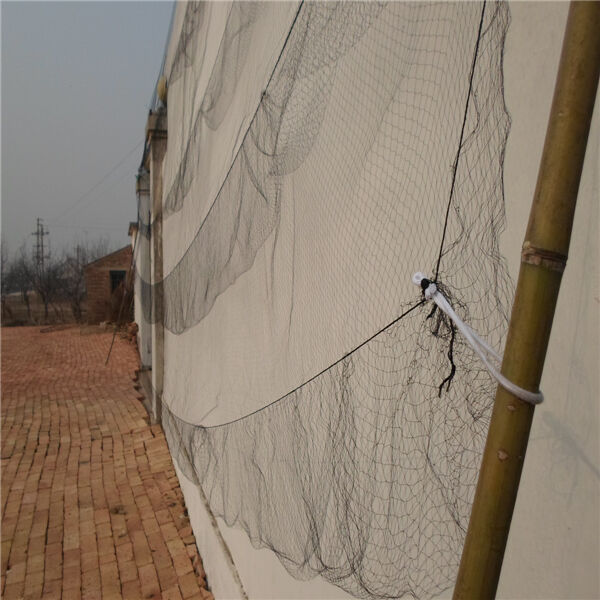
Some bird net designs also incorporate intermediate support lines woven into the mesh at regular intervals. These internal reinforcement strands act like structural ribs, preventing the net from deforming under its own weight when spanning large unsupported areas. The result is a bird net that maintains its intended geometry in the field, providing consistent coverage without the need for dense support structures underneath.
Installation Mechanics That Leverage Lightweight Design
Handling and Deployment Efficiency
The practical benefit of a lightweight bird net becomes most apparent during installation. A net that can be carried, unrolled, and positioned by a single worker without mechanical assistance reduces labor costs significantly, particularly for large-scale applications like orchard rows or commercial fishpond covers. Lightweight bird net also reduces the risk of installation errors caused by fatigue or awkward handling, which can lead to gaps, uneven tension, or damage to the mesh before it is even secured.
Modern bird net products are typically supplied in rolls or folded packs that are sized for practical handling. A standard roll covering 50 to 100 square meters of pond or garden area should weigh no more than a few kilograms when manufactured from quality HDPE with an appropriate aperture. This weight target is achievable without sacrificing the tensile strength needed to withstand outdoor conditions, demonstrating that the strength-weight balance is a realistic engineering outcome rather than a marketing claim.
The flexibility of lightweight bird net also simplifies installation around irregular shapes. Ponds, garden beds, and orchard plots rarely conform to perfect rectangles. A net that drapes and conforms easily to curved edges, sloped banks, and irregular perimeters reduces the need for cutting, joining, and custom fabrication on site. This adaptability is a direct functional benefit of the lightweight, flexible material properties that quality bird net engineering prioritizes.
Fixing Systems Compatible with Lightweight Nets
A lightweight bird net requires a fixing system that matches its load characteristics. Heavy nets demand robust anchor posts, tensioning hardware, and structural frames that add cost and complexity to the installation. Lightweight bird net, by contrast, can be secured using simpler systems — ground pegs, lightweight aluminum frames, floating anchor lines, or even weighted perimeter ropes — without compromising the integrity of the installation.
For pond cover applications, lightweight bird net is often deployed using a floating frame system or simply draped over the water surface with weighted edges. The low mass of the net means it does not sink or deform the frame, and the buoyancy of the water provides natural support across the span. This installation method is fast, reversible, and requires no permanent infrastructure, making it ideal for seasonal use or temporary protection during vulnerable periods such as fish spawning or fruit ripening.
In garden applications, lightweight bird net can be supported by simple hoops or canes inserted into the soil, creating a low-profile tunnel or canopy structure. The net's weight is low enough that standard bamboo canes or lightweight plastic hoops provide adequate support without bending or collapsing. This simplicity is a direct consequence of the strength-weight engineering built into the bird net material itself.
Durability Factors That Sustain Long-Term Performance
Weather Resistance and Seasonal Cycling
A bird net that balances strength and lightweight installation must also sustain that balance across multiple seasons of outdoor exposure. Temperature cycling, UV radiation, moisture absorption, and mechanical stress from wind and wildlife all degrade netting materials over time. The rate of degradation determines the effective service life of the bird net and the total cost of ownership for the buyer.
HDPE bird net with integrated UV stabilizers typically maintains its mechanical properties for three to five years under continuous outdoor exposure, and longer when stored during off-seasons. The UV stabilizers work by absorbing or reflecting the high-energy wavelengths that break down polymer chains, slowing the degradation process significantly. Without this protection, an unprotected polyethylene bird net may become brittle and lose tensile strength within a single growing season in high-UV environments.
Moisture resistance is equally important. Unlike natural fiber nets, HDPE bird net does not absorb water, which means it does not gain weight when wet, does not rot, and does not support mold or mildew growth. This property is particularly valuable for pond cover applications where the net is in constant proximity to water. The consistent dry weight of the bird net ensures that installation calculations remain accurate regardless of weather conditions.
Resistance to Physical Stress and Wildlife Pressure
Birds, particularly larger species like herons, cormorants, and crows, can exert significant physical pressure on a bird net. They may land on the surface, attempt to push through the mesh, or repeatedly strike the net in an effort to reach food below. A bird net that lacks sufficient tensile strength will deform, tear, or pull free from its anchors under this kind of sustained pressure, defeating its protective purpose entirely.
Quality bird net is tested for break strength at both the strand level and the junction level. The strand break strength determines how much force a single fiber can withstand before failing. The junction strength determines how well the mesh holds together when force is applied at an angle or across multiple strands simultaneously. Both values must be adequate for the intended application, and both can be achieved without adding excessive weight when the material and construction method are properly engineered.
For heavy-duty applications such as commercial fishpond protection or large orchard coverage, bird net with a higher denier and reinforced junctions provides the necessary resistance to wildlife pressure while remaining manageable during installation. The key is matching the net specification to the actual threat level rather than defaulting to the heaviest available option, which would unnecessarily compromise the installation efficiency that lightweight bird net design is intended to provide.
FAQ
What makes a bird net both strong and lightweight at the same time?
The combination of high-density polyethylene material, optimized fiber denier, and knotless mesh construction allows a bird net to achieve high tensile strength without adding unnecessary mass. UV stabilizers and reinforced edges further enhance durability without significantly increasing weight, making the net practical for single-person installation while maintaining reliable protective performance.
How do I know if a bird net is strong enough for my pond or garden?
Check the manufacturer's specifications for strand break strength, mesh aperture, and UV resistance rating. For pond cover applications, look for reinforced perimeter edges and a mesh aperture of 15mm to 25mm. For gardens with heavy bird pressure, a higher denier bird net with knotless construction provides better resistance to deformation and tearing without making installation significantly more difficult.
Can a lightweight bird net withstand wind and rain without sagging or tearing?
Yes, provided the bird net is properly tensioned and anchored at the perimeter. Lightweight HDPE bird net does not absorb water, so rain does not add significant weight to the installed net. Wind resistance depends on the tension applied during installation and the quality of the anchor system. Using reinforced edge ropes and adequate fixing points ensures the net maintains its shape and coverage even in adverse weather conditions.
How long does a quality bird net typically last outdoors?
A bird net manufactured from UV-stabilized HDPE typically lasts three to five years under continuous outdoor exposure. Service life can be extended by storing the net during off-seasons, avoiding sharp contact points that cause abrasion, and inspecting the perimeter fixings regularly for signs of wear. Proper installation and seasonal maintenance are the most effective ways to maximize the return on investment from a quality bird net.